

Financing the Green Transition Through Public-Private Partnerships
Executive Summary
The world is at a turning point. Since 2015, the Sustainable Development Goals (SDGs) have helped drive meaningful progress, but reaching the 2030 targets is becoming more difficult. Geopolitical tensions, economic uncertainty, and rising inequality are putting many development gains at risk.
Despite these challenges, progress continues in some areas—especially in renewable energy—supported by new financing approaches and strong partnerships.
This case study explores how public–private partnerships (PPPs) can speed up the green transition in a divided global environment. It reviews the current state of sustainable development, highlighting both progress and ongoing challenges. By examining a successful renewable energy PPP, the study identifies what works and offers practical recommendations for governments, businesses, and investors.
The key message is clear: in a fragmented world, collaboration across the public and private sectors is not optional—it is essential to mobilize the large-scale investment needed to build a sustainable, resilient, and inclusive future.
1. Introduction: The Challenge of a Fragmented World
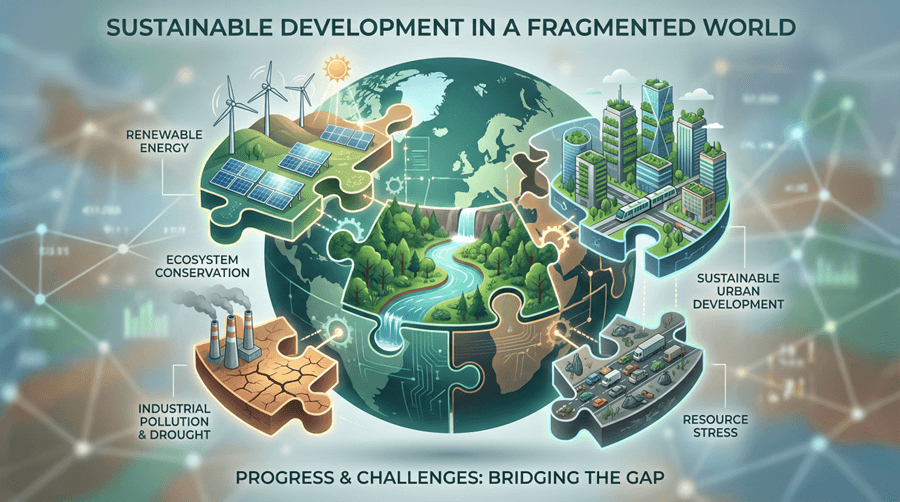
The need for sustainable development is greater than ever, but achieving it has become more complex. The 2030 Agenda sets out a shared plan for a better future, yet progress is taking place in a world that is increasingly divided. Rising geopolitical tensions, protectionism, and economic rivalry are making global cooperation harder and slowing coordinated action on major issues like climate change and inequality.
Recent global reports show that progress toward the Sustainable Development Goals (SDGs) has been uneven. Conflicts, climate-related disasters, and rising debt costs are holding many countries back, with the greatest impact on the most vulnerable populations. As a result, traditional approaches to development financing are no longer enough to meet today’s challenges.
This case study focuses on public–private partnerships (PPPs) as a practical solution. By combining public-sector leadership with private-sector funding, innovation, and efficiency, PPPs can help reduce risk and scale up sustainable infrastructure—especially renewable energy projects.
The key takeaway is that even in a fragmented global environment, strong partnerships can close financing gaps and speed up the transition to a more sustainable, low-carbon economy.
2. The State of Sustainable Development: Progress and Peril
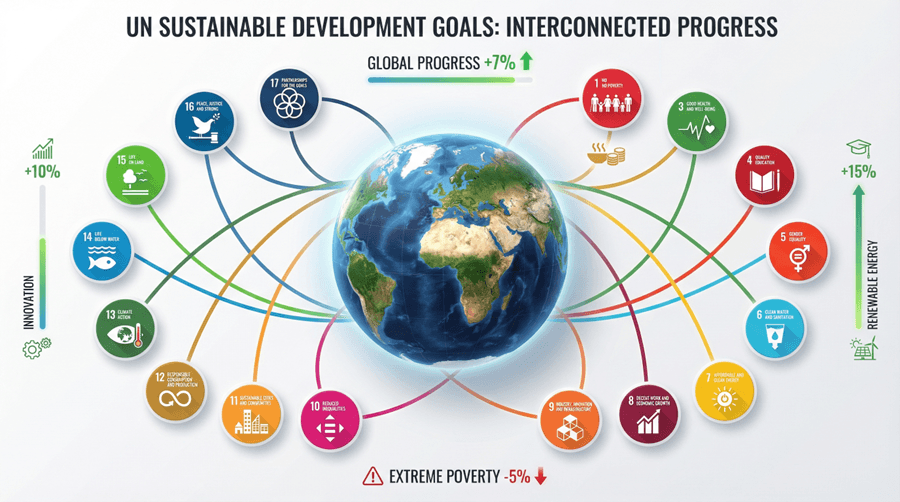
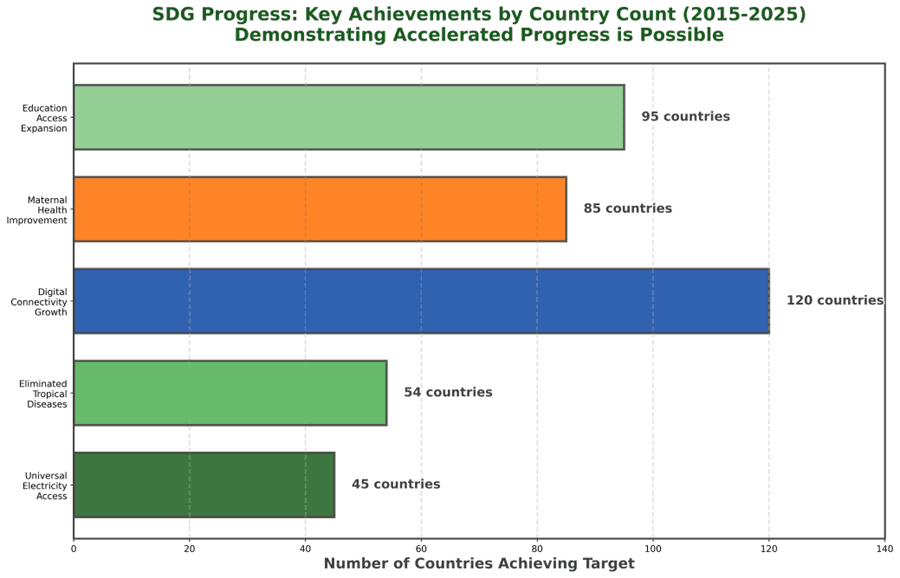
Even in a challenging global environment, the past decade has shown that progress toward the Sustainable Development Goals (SDGs) is both possible and impactful. The UN’s 2025 report highlights encouraging successes that demonstrate the power of coordinated global action.
Since 2015, millions more people have gained access to education, maternal and child health outcomes have improved, and the digital divide has narrowed. Strong prevention efforts have significantly reduced the impact of infectious diseases such as HIV and malaria, saving lives and strengthening communities.
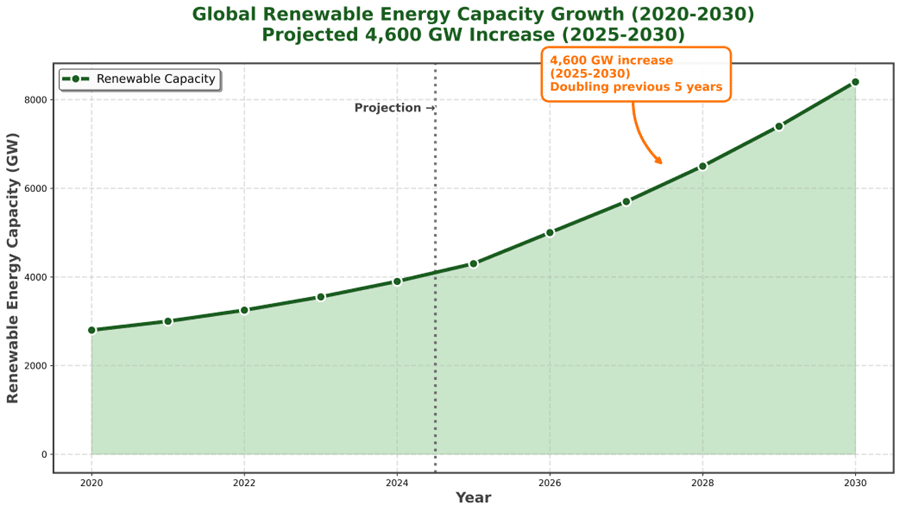
One of the most inspiring advances has been in energy access. Forty-five countries have achieved universal electricity access, and renewable energy is now the fastest-growing power source worldwide—showing that a cleaner, more inclusive energy future is already taking shape.
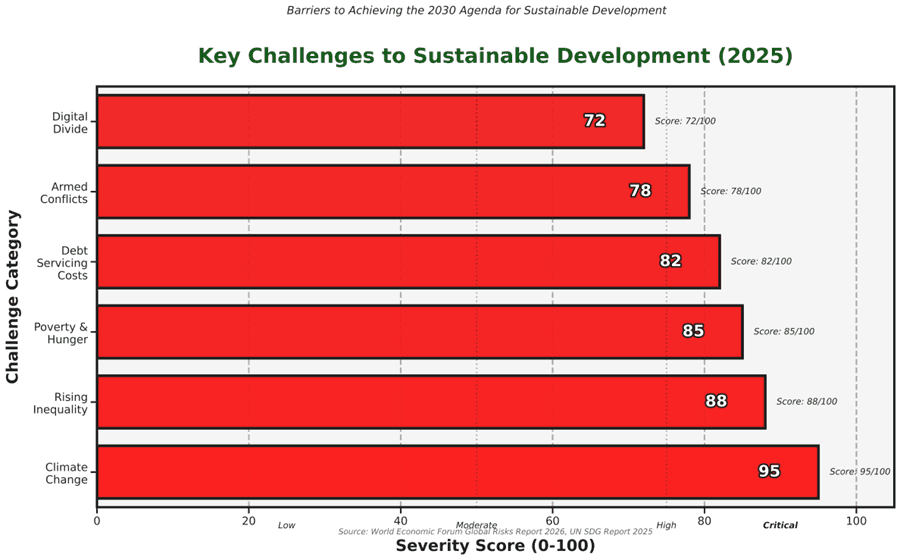
Despite real progress, major challenges remain. Millions of people still live in extreme poverty, face hunger, or lack access to basic services. Inequality continues to affect women, people with disabilities, and other marginalized groups.
At the same time, rising conflicts, climate-related disasters, and growing debt in many developing countries are putting hard-won gains at risk. With only five years left to meet the 2030 targets, the UN Secretary-General has warned that the world must “shift into overdrive.”
These challenges are especially clear in the energy sector. Clean energy is central to the 2030 Agenda—critical for tackling climate change and ensuring access to electricity for all. While renewable energy is growing rapidly, the investment needed to fully decarbonize the global economy is enormous. Closing this gap will require new and innovative financing approaches.
3. Financing the Green Transition: The Trillion-Dollar Challenge
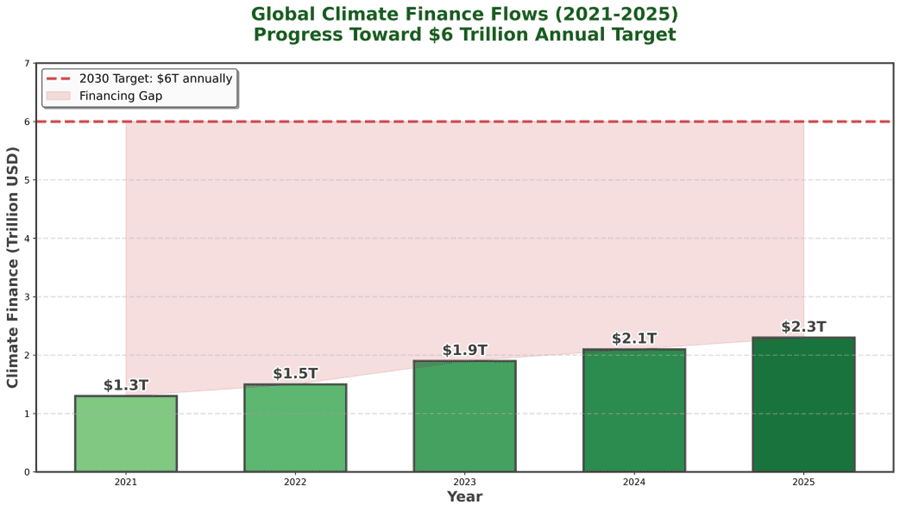
The transition to a global low-carbon economy represents one of the greatest investment opportunities in human history. However, the scale of capital required is immense. The Climate Policy Initiative estimates that annual climate investment needs to reach at least $6 trillion by 2030 to meet global climate goals [7]. While global climate finance flows are increasing, reaching a record $2.3 trillion in 2025, a significant gap remains [8].
Public funding alone is not enough to close the financing gap for sustainable development. Many governments—especially in developing countries—face high debt and competing priorities, which limit how much they can invest. As a result, private investment is essential. However, private investors often hesitate due to high upfront costs, long payback periods, policy uncertainty, and currency risks.
This is where blended finance and public–private partnerships (PPPs) play a key role. PPPs bring together governments and private companies to deliver public infrastructure, such as renewable energy projects.
In a typical renewable energy PPP, the government may provide land, permits, and long-term power contracts, while private partners finance, build, and operate the project. This allows each side to focus on its strengths:
Public sector: Sets long-term goals, ensures stable regulations, and reduces political risk
Private sector: Provides funding, technology, efficiency, and innovation
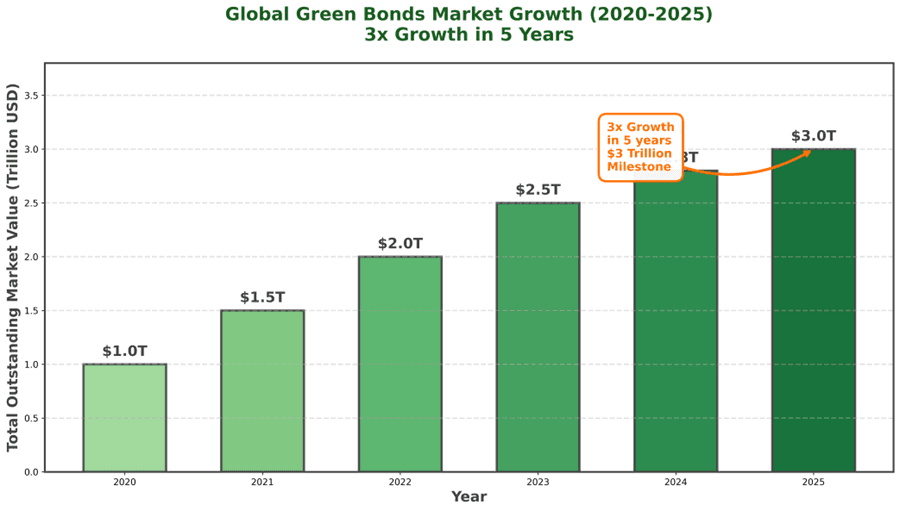
By sharing risks, PPPs make projects more attractive to investors. The rapid growth of the green bond market, now worth over $3 trillion, shows that when projects are structured well, there is strong demand for sustainable investment.
By leveraging public funds to de-risk projects and attract private capital, PPPs can mobilize finance at the scale and speed required to accelerate the green transition. The following case study provides a concrete example of this model in action.
4. Case Study: The Amandla Solar Project, Republic of Zendalia
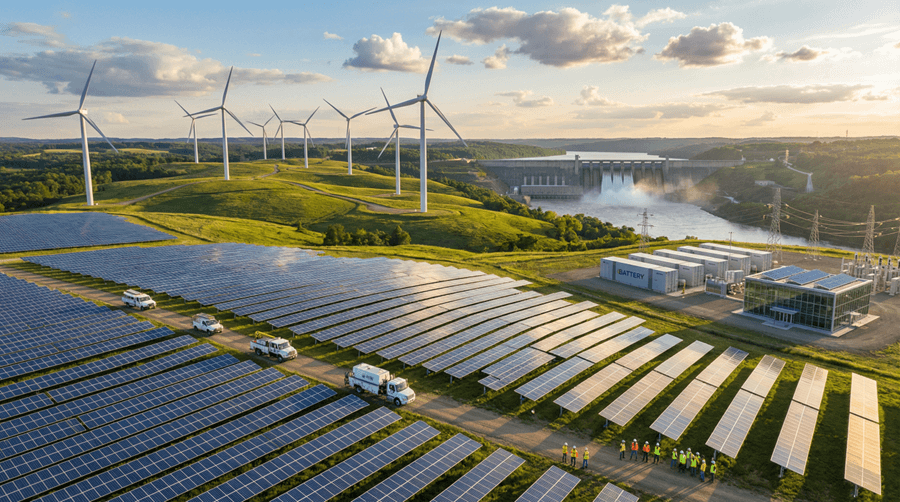
To illustrate the power of Public-Private Partnerships in action, we examine the hypothetical but representative case of the Amandla Solar Project in the Republic of Zendalia, a developing nation in Sub-Saharan Africa.
The Challenge: An Economy in the Dark
Before 2022, the Republic of Zendalia was facing a serious energy crisis. Only 45% of the population had access to electricity, and the power supply was unreliable and expensive. The country depended heavily on old diesel generators, which led to frequent outages and high costs.
These power problems slowed economic growth and discouraged investment. Many households relied on kerosene for lighting, which was costly and harmful, while essential services like healthcare and education struggled to operate.
Although the government had a strong vision for sustainable development and universal energy access by 2030, it lacked the funding and technical expertise needed to build large-scale renewable energy projects.
The Solution: A Landmark Public-Private Partnership
In 2023, the Government of Zendalia, with advisory support from a leading global consulting firm, launched a competitive tender for a 200 MW solar power plant under a PPP framework. The project, named "Amandla" (meaning "power" in the local dialect), was structured as a 25-year Build-Own-Operate-Transfer (BOOT) concession.
The Partnership Structure:
* Government of Zendalia (Public Partner):
* Provided a 500-hectare parcel of land for the project.
* Guaranteed a 25-year Power Purchase Agreement (PPA) through the national utility, ensuring a stable revenue stream.
* Provided sovereign guarantees to mitigate political risk for international lenders.
* Streamlined the permitting and licensing process.
* Amandla Energy Consortium (Private Partner):
* A consortium comprising an international energy developer, a local construction firm, and a syndicate of development finance institutions and commercial banks.
* Responsible for the design, financing, construction, and operation of the solar plant.
* Secured a blended finance package of $250 million, combining concessional loans from development banks with commercial debt and equity.
The Role of the Consulting Firm
A global consulting firm played a pivotal role throughout the project lifecycle, acting as a strategic advisor to the Government of Zendalia. Key contributions included:
1. Feasibility and Structuring: Conducted the initial technical and financial feasibility studies, designed the PPP structure, and developed the bankable PPA that would attract international investors.
2. Transaction Advisory: Managed the entire competitive bidding process, from preparing tender documents to evaluating bids and negotiating the final concession agreement.
3. Capacity Building: Worked with government ministries and the national utility to build the internal capacity required to manage the PPP contract and oversee the project effectively over its 25-year lifespan.
The Results: A Brighter Future
Commissioned in late 2025, the Amandla Solar Project has delivered strong performance across financial, operational, and ESG metrics:
Commercial and operational performance: The project supplies utility-scale renewable power to approximately 1.5 million end users and 50,000 commercial customers, materially reducing reliance on imported diesel generation and improving grid stability. Construction generated over 500 jobs, while ongoing operations support 80 permanent skilled roles, indicating stable long-term operational capacity.
Environmental performance: The project displaces an estimated 300,000 metric tons of CO₂ annually, directly contributing to Zendalia’s climate commitments and enhancing the project’s ESG profile—an increasingly important factor for institutional and impact-oriented investors.
Social and developmental outcomes: Expanded and reliable electricity access has improved productivity, healthcare delivery, and small-business formation, reinforcing the project’s alignment with inclusive growth and development finance objectives.
Market signaling and scalability: Critically, the success of Amandla has reduced perceived country and execution risk, serving as a proof of concept for large-scale renewables in Zendalia. This has helped unlock additional private capital, with the government now advancing a pipeline of bankable wind and solar projects structured on similar public–private partnership terms.
Investment implication: Amandla demonstrates how well-structured renewable PPPs can deliver predictable cash flows, strong ESG outcomes, and market-creating effects—positioning Zendalia as an increasingly attractive destination for long-term infrastructure investment.
5. Key Success Factors and Recommendations
The success of the Amandla Solar Project offers valuable lessons for other developing countries looking to attract private investment for sustainable infrastructure. The following factors were critical to its success and serve as a blueprint for future PPPs.
Success Factor | Description | Recommendation for Governments & Businesses |
Strong Political Will & Stable Policy | The Zendalian government demonstrated unwavering commitment to the project, creating a stable and predictable policy environment. | Governments: Establish clear, long-term renewable energy targets and avoid sudden policy reversals. Businesses: Prioritize markets with a demonstrated political commitment to sustainable development. |
Bankable and Well-Structured PPA | The 25-year Power Purchase Agreement, backed by a sovereign guarantee, provided the revenue certainty that lenders required. | Governments: Work with experienced advisors to structure PPAs that are fair, transparent, and aligned with international best practices. Investors: Conduct thorough due diligence on the off-taker's creditworthiness and the PPA's legal enforceability. |
Effective Risk Allocation | The PPP structure allocated risks to the party best equipped to manage them. The government handled political and regulatory risks, while the private consortium managed construction and operational risks. | Both: Clearly define and allocate risks in the concession agreement. Use mechanisms like political risk insurance and sovereign guarantees to mitigate risks that are beyond the private sector's control. |
Blended Finance Structure | The combination of concessional financing from development banks with commercial debt and equity was crucial for making the project financially viable. | Governments: Actively engage with Development Finance Institutions (DFIs) to access concessional capital that can de-risk projects and attract private lenders. Investors: Explore blended finance structures to improve the risk-return profile of investments in emerging markets. |
Local Partnership and Capacity Building | The inclusion of a local construction partner and a strong focus on local job creation and skills transfer ensured community buy-in and long-term sustainability. | Businesses: Prioritize partnerships with local firms and invest in training and capacity building to create shared value and a positive social legacy. Governments: Mandate local content and skills development as part of the PPP agreement. |
6. Conclusion: Building Bridges in a Fragmented World
Reaching the 2030 goals is a race against time in a world marked by uncertainty and division. The Amandla Solar Project shows that progress is still possible—and can even be accelerated—when the public and private sectors work together.
Public–private partnerships are more than a way to fund projects. They help connect public goals with private innovation, national development priorities with global investment, and today’s needs with a sustainable future.
For consulting firms, this creates a clear opportunity. By serving as trusted advisors, deal experts, and capacity builders, they can help unlock private capital to support the Sustainable Development Goals. The challenges we face—such as climate change and inequality—are too large for any one group to solve alone.
In a fragmented world, success will depend on strong partnerships. By designing and delivering effective PPPs, we can help build a more prosperous, inclusive, and resilient future for generations to come.
“The transition to a sustainable economy will require unprecedented collaboration between the public and private sectors.” Mark Carney (prominent global central banker, economist, and climate finance advocate.)